Sunday, October 3, 2010

A week in nature

Now that all of the kittens have been adopted and I'm playing the waiting game with the garden, I took a week to reconnect with the mountains. I'm feeling like myself again but my apartment is a mess of dirty clothes and backpacking gear. While I was gone, my garlic, shallots and cover crop seeds arrived so I will be ready to plant all of those things this month after I rip the tomatoes out of the ground. My tomato seed saving experiment came to completion and no matter how foul smelling it was, it was a success and I can recommend it! 
The weather was unseasonally warm in the high sierras and I couldn't help but wonder if my tomatoes were ripening down in the hot valley. When I returned from my mountain air escape, I found that the tomato plants had not only spouted new flowers but some of the plants that I thought were petering out, jutted up and now look like real plants. I'm sad that soon the freezing cold will break the bad news to them.

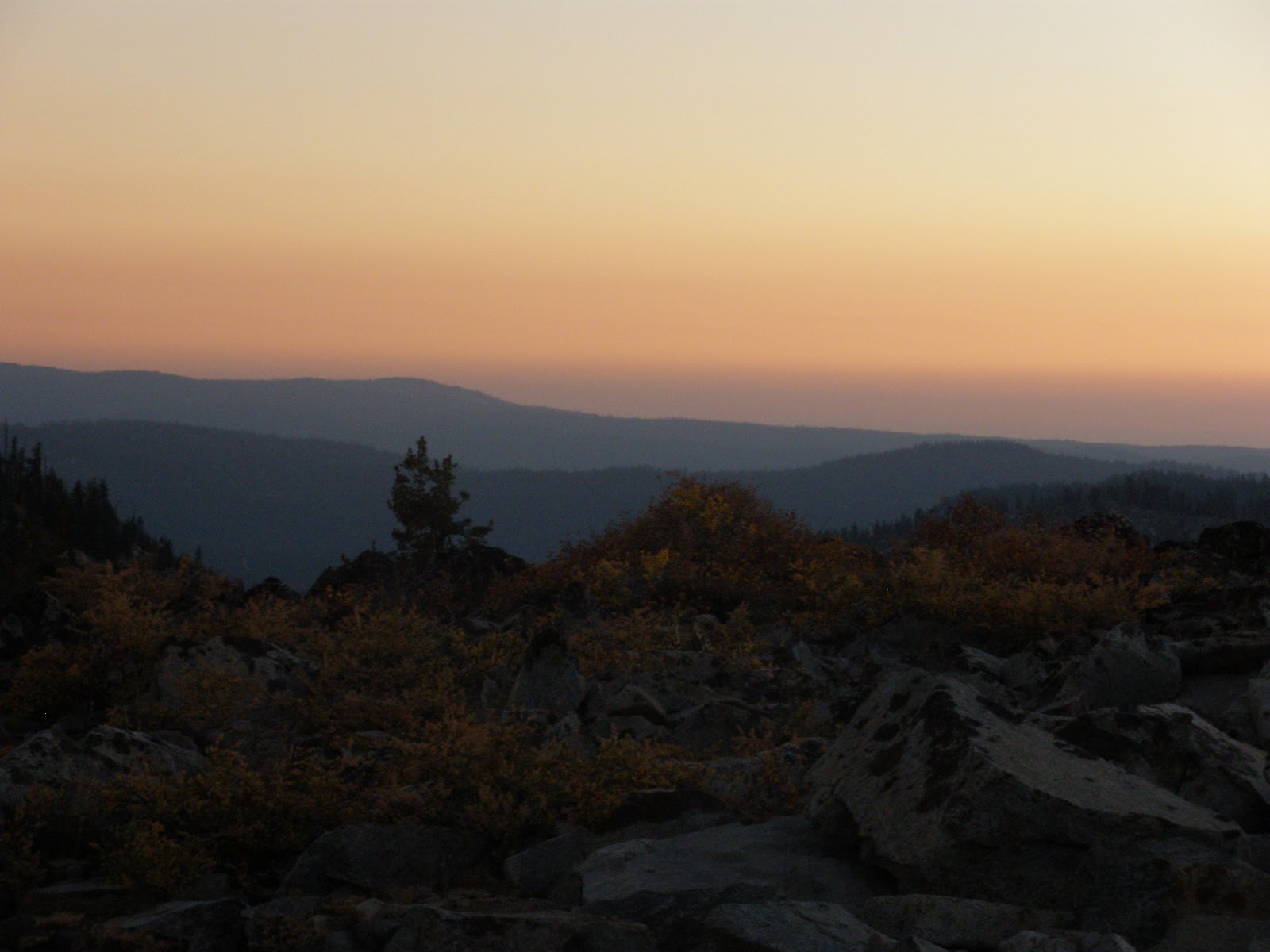
Here are some pictures from my trip - pictures just can't do it justice but I hope you can see just how majestic and phenomenally beautiful it is. How could I not be renewed?

Going over the 8,800 ft. ridge - running a bit late and chasing the sun.

Here at Lake Lucille. The hill in the background is Keith's
Dome - only a little over 8,600 ft but has a mighty view.

Here is the view! Lake Tahoe in the far back and Fallen Leaf Lake in the front.

That was the next mountain that we tackled. Looks
impossible from here but everything is possible if you just do it.


 The huge but little looking lake way in the background
(you can barely see it) was the next day's adventure.

This is that "little" lake that made us feel so small and insignificant.
Pyramid Peak in the background. The lake is a couple miles long.

View from the top of Mt. Ralston (over 9,200 feet).

One of our campsites.

And here we are!

It was a trip of renewal, adventure, inspiration and of course exhaustion. Now that things are slowing down in the garden, you should consider doing whatever it is that inspires you. Take the time to just do it.

Daphne

Thursday, September 23, 2010

Saving Your Heirloom Tomato Seeds

I have started my seed saving process but just realized this morning that I've been doing it all wrong. I looked in the envelope to find sticky seeds glopped together. The real process sounds disgusting but it's worth a shot. I'll start mine on Saturday. Here is the link to the eHow version: http://www.ehow.com/how_2091104_save-heirloom-tomato-seeds.html.

If you have any better ideas, I'd love to hear them!

Daphne

Wednesday, September 22, 2010

First Day of Fall

Two years ago I witnessed a young lady riding her bike through the park and she unknowingly ran over a squirrel’s tail. The tail sheath came off leaving a puff of fur on the ground and a poor little squirrel without a tail to keep him balanced on tiny limbs and warm at night. The squirrel ran up a tree and cried for over an hour. I felt horrible. I’ve often wondered what happened to that creature and I’ve thought about the event ad nauseum. Yesterday, I saw a squirrel scampering through the same park – it only had a nub of a tale. It made me smile. I’d like to think that it is that same squirrel.

I realize this seems like a strange story to start out with after my blog absence for a few weeks but to me this story is a lesson in patience. Things that torment us, even in our gardens, resolve themselves. Nature always does. My infestation of aphids has been resolved. My fall garden is coming up and some lettuces have been eaten by animals or bugs but I’ll plant more because I’m okay with sharing. My bees have somehow managed to do what they have been doing for thousands of years without my input at all. Most things we cannot control – we really need to focus on manage things to accomplish what we've set out to do.

My heirlooms have decided to ripen just in time for fall. Lord help them. It’s nearly October and I’m just starting to harvest tomatoes. This is something that I can’t control but I know that they need temperatures above 55 degrees at night to be able to ripen. But I have a trick for you. If you are experiencing temperatures below 55 degrees at night, take one of your greenish tomatoes inside (pick one that is a good representation of most of the tomatoes on the vine) and cut it open. If you cut through it and the seeds get cut along with the flesh, you’re out of luck because this tomato will never ripen. If you cut through it and the seeds separate from the flesh (in their gelatinous sack) you’re golden. This means that the tomato will ripen on your kitchen counter.

All that you need to do is pick the greenish tomatoes that look similar to your sample and set them out on your counter and they will ripen. The other option is to rip up the plant by the roots and hang it upside down in your garage or barn or perhaps in your home with newspaper or a bin to catch debris underneath it. The tomatoes should ripen up nicely this way. Enough about tomatoes.

More importantly, I removed my first frame of honey last weekend because I couldn’t stand it any longer! The extractor is not finished because I’ve been sidetracked but I wanted to take just one little frame and taste it. The bees weren’t very pleased with me but I continued on my path. I took the single frame of honey inside and weighed it – it was 4 lbs. 8 oz. and it certainly felt like it. I simply cut the comb out of the frame, broke off a piece and placed it in my mouth. The honey oozed out as I chewed and tasted so good – now I know why the Greeks called it ambrosia because this certainly was fit for gods. They say that beekeepers always think their honey is the best but without bias I can assure you that this honey is divine!

Other honey’ish news – I hate most beekeepers and have stopped going to my association meetings. ’Nuff said.

Daphne

Friday, September 3, 2010

A note about cover crops

The days and weeks of the last month have virtually jumped up off my calendar and disappeared. I don't know where they went and I seem not to have much to show for the lost time except 5 kittens have new and loving homes (as of yesterday), my fall garden's seeds are starting to rear their delicate green heads and I am no longer invested in a group a crazies. Well, maybe I have accomplished a lot after all but it's all seemed like a dream and I was simply a drone getting everything done. Tonight the last two adopters are picking up their new kittens and I'll juts have one more to place. Tomorrow we will finish building our honey extractor and maybe after that, I can go back to my normal life and possibly find my camera cord! Now wouldn't that be nice?

As of right now I have planted cauliflower, broccoli, leeks, scallions, lettuces, potatoes, beets, turnips cabbages, brussles and bok choy as well as lots of flowers. I just realized that fall and winter crops don't take up nearly as much room as the summer vegetables. After I rip my tomato, peppers and melons out, I'm going to have a ton of space available. One thing to keep in mind is that you shouldn't let your soil go dormant for more than a month if you can. If you aren't growing anything in the soil then the microbes and nutrients leave you with nothing but dirt. So, my empty beds leave me with a predicament. I'm going to plant hairy vetch (image above) where my tomato plants and pepper plants were, clover between my cabbages, and oats and rye in the other beds. Those of you in the cooler states, you can plant hairy vetch and rye. They are generally hardy enough for your cold winters and they also fix nitrogen in the soil. If you are interested in cover crops and green manuers, here is a link to a overview of these crops from the National Sustainable Agriculture Information Service. Keep your soil in good shape and you will be so pleased with yourself next spring. I promise.

One other bit of advice that I read in Organic Gardening magazine this month is: Don't react to pests in your garden for at least two weeks. Usually within two weeks, the beneficial insects will be able to manage your issue.

I'm thinking it would be hard for me to wait around but I'm willing to give it a try.

Still searching for my camera cord,

Daphne

Monday, August 23, 2010

Fall Garden Planting

As life is moving closer and closer back to “normal,” things are starting to get done in the garden again. All of the ears of corn have been ripped from their stocks, the winter squash have been harvested and are waiting to cure, the sunflowers were decapitated and then blasted down, and the summer and winter squash vines have been torn from their clutches on the earth.

The old is becoming new again and things are starting to get exciting once more. The soil has been turned and new fall seeds have been planted. Finally the heirloom tomatoes are starting to earn their keep. They are turning their various shades of pink, orange, red, yellow and striped patterns (I should be getting some purple ones one of these days). All of the marigolds and other flowers I’ve planted in the garden are in full bloom and everything looks lovely and fresh.

For the fall and winter garden, I’ve planted broccoli, cauliflower, various beets, leeks, green onions, turnips, Brussels sprouts, two types of cabbages, bok choy, Romaine lettuce, Butter Crunch lettuce, Endive, Red leaf lettuce, and something called Great Lakes lettuce. I don’t know if I’m remembering everything but I’ll draw another diagram and post it so that I can at least keep track of what is what and where it is. I’m going to try a variation of the garbage can potatoes thanks to the great post by Anna from Back to Our Roots. My potatoes did so great during the summer that I’m excited what they might do during actual potato season. The winter squash that I’ve already picked (Blue Hubbard, Butternut and Buttercup) will be ready to eat for the full winter season.

Things that I’ve learned from my summer garden this year:

1) Do not plant sunflowers in the actual garden. The sunflowers were the biggest culprits in the pest department and I really think they created the domino of an aphid infestation in other plants. They also are loved by the ants too much for my own good.

2) Keep control over the winter squash vines and don’t plant them next to the summer squash plants.

3) So far the heirlooms that I’ve been able to taste have been terrible. They look so beautiful yet when you take a bite, you wish you’d taken a bite from a cow pie instead. They have been absolutely dreadful. Moral: Always, plant hybrids too just incase. I’m not sure if it’s been the unseasonably cool weather or if they are just disgusting by nature. Yuck! It will be 105 for a couple of days this week so I’ll have to get back to you on that one.

4) Plants don’t like growing exclusively in compost. The organic compost that I purchased and had dumped on my site is gorgeous. It’s black and luscious looking however I’ve noticed that where the compost is thickest, the plants never grew at all. They struggled the whole time and didn’t produce much at all. The outer edges of the garden where the actual soil and compost was mixed 50-50 is where the plants are happiest.

5) Don’t grow corn in a row. Corn should be grown in blocks or a circle so that the silks can be pollinated easily. Also, I read that you can tape up the ends of the ears after they have been pollinated so that they don’t get infested with corn earworm. I unfortunately had this problem but all that we had to do is break off the first inch or two that had been snacked on.

6) Lastly, I’ve learned that everyday I learn something new and not to get discouraged. That’s why it’s best to push yourself and try things in the garden that you haven’t tried before – new varieties and new planting ideas. It all helps you and builds on what you already know. Right now I’m looking into what companion plants will work with my fall and winter vegetables.

Even if you’re not planning a fall or winter garden, remember to plant flowers that will last through the fall to keep your pollinators well fed during this time of things starting to dry out and their sources of food are getting scarce. Plus this makes your yard and garden look nice. I’m planting another round of zinnias, daisies, lavender, snapdragons, asters, marigolds and I’m not pinching back all of my basil, mint and cilantro anymore because I want some of it to flower for them.

And on a very happy note, two of the kittens have been adopted. They aren’t ready to leave the litter yet but they have a happy home waiting for them. Two others have potential homes so things are moving along. Each one of those kittens has a special personality and they have such gratitude. It sounds silly but I think they somehow understand that they have been saved and a better life awaits them.

I hope everyone’s summer garden has been bountiful and educational.

Daphne

Thursday, August 12, 2010

A chapter has closed

I've turned a leaf and it’s over. Here is my resignation letter that I've submitted to my fellow executive officers and the editor of the newsletter:


####
Due to increased responsibilities in my day-to-day life as well as the desire to remove myself from a hostile situation, please accept my resignation as vice president as of today.

I’ve left the board and membership in good shape for the rest of the year. With this association, I simply got myself involved in something I have no interest in entertaining. I wish you all success in whatever your desires for the association are. I have met a few good people through my time here and my thanks go out to those of you that showed me kindness.

If you wish to continue with what I’ve set in place, here is the speaker line-up for the rest of the year:

  • George will present next week at the August meeting.
  • Kim will speak in September in regards to overwintering hives. Further contact needs to be made with him to get the specifics in order. I would recommend doing this soon.
  • Annette has agreed to speak at the October meeting. Her contact information is on the membership list but she is on vacation for the next two weeks.
  • November’s meeting is an open forum Swap ‘n Sell/Gadget Night which I’ve already promoted in the newsletter.
Kathy, if you could please remove my name as the contact person on any of the calendar events, I would really appreciate it.
If there are further questions relating to any of the things I’ve worked on as vice president or acting vice president, please feel free to contact me via email.
Sincerely,
Daphne
####


I sent this after there was a literal physical altercation between two board members at the IHOP. Ridiculous I know. It got too crazy and tempers were too high. There becomes a point when you have to ask yourself, "For what?" I couldn't find any good reason.
I think my adverse reaction was based on the timing as well. I had just gotten back from a 5 day backpacking trip which as absolutely amazing. We went to this little known cabin that was built in the 1920's or 30's by a hermit. It takes 2 days to get to and there is no trail. What this guy did was incredible and he did it all by himself - no mule, no equipment, nothing. He brought in pieces of a cast iron stove piece by piece to assemble. Each time he went to town it took him 2-4 days and it is a dangerous canyon to hike in and out of. Anyway, I guess my point is that my perspective on what's important made me have zero tolerance for people being nasty just because they were bored. It's known that this hermit made friends with anyone that treated him with respect and he was fighting for his survival every single day in that inhospitable and desolate canyon. (maybe I can post some pictures tonight if time allows)
As for the garden, it is actually on its way out or at least this phase is. It's still in full production but some of the plants are starting to die back. I've pulled out all of the potato plants to plant new ones, and there are a few other things that got yanked to reveal a naked bed. My tomatoes are just starting to turn and I can't wait to taste them. I'm going to plant some seeds for the fall this weekend.

Kittens are doing great and getting bigger and more playful everyday. They have their six week appointment this Saturday!

Daphne

Tuesday, August 3, 2010

Kittens

I’ve been neglecting my garden just as much as I have been my blog. I picked wild blackberries about two weekends ago, showed off what I had scored (3-4 gallons worth) and made a blackberry pie and then the plan was to work in the garden.

I heard a noise reminiscent of baby birds so I decided to go outside and what did I find? I spied five little kittens standing in the front yard of my parents’ house. They had been abandoned by their mother. Well, after talk and consideration, we realized that the mother had been eaten by a coyote a couple of days before.


Of course my bleeding heart swooped them up and then tried to figure out how on earth I would take care of them. A few hours later I had a funny feeling that there may have been more. So around 10 p.m. I went back out and found one more of them. Alas there are six. I felt badly that he was left out there by himself but that should be a lesson to us all – don’t be shy about someone offering to help.


After spending the entire weekend at my parents’ house, feeding them with kitten formula every four hours, I realized that I would not be able to give them the support and attention they needed. I called rescue organizations and they were all over capacity. I learned that if I took them to a shelter, they would be euthanized immediately because they are less than 2 pounds. What I really needed was maternity leave but I knew that wouldn’t happen.

My friend's dog, Ali and new matching companion, Tux.

Luckily after just a few minutes of frantic web searches, I found a program through UC Davis. The program is called the Orphan Kitten Project and they are so awesome. Usually, one of the resident veterinarians would be taking them home and taking care of them as part of their training but of course, they were also over capacity. I felt out of luck until they said that I could foster the kittens under their program but I would be the foster. Still stuck with the same problem of not being able to give them the attention they need but at least I wouldn’t be spending $25 a day on formula like I had been. The Project provides, supplies, food and all of the medical care including vaccines, spay/neuter and a microchip. All I have to do is raise them, take them to their appointments at my dedicated resident veterinarian’s apartment, and find homes for them.

So far it’s been very hectic but I’m so glad that I have help. Two co-workers have really pitched in and have saved my skin. One of them is home recovering from surgery so she’s offered to take them in and bottle feed every 4 hours. My other co-worker comes with me at night after work and we all feed again, bathe, blow-dry, clean bedding and make sure that each of them gets ample human cuddle time.


They’ve had their first appointment and everyone is healthy. Today they are 30 days old and just starting to use the litter box and eat a mix of wet kitten food and formula.

I did visit the garden last weekend and everything was doing great. See, it doesn’t need me. I did pull all of my beets and chard out. I’ll be planting some things for fall in there (maybe spinach and more beets).

Oh and I made a really good tasting lasagna made of zucchini (I know you understand) and Japanese eggplant. I’ll put up that recipe when I have a few minutes time. I just threw it together so I don’t really have a recipe yet but if you already know how to make things without a recipe, basically I made a béchamel, marinara sauce, homemade wheat and semolina flour pasta (rolled out really thin), sautéed the zucchini and eggplant with some olive oil, garlic powder, salt and pepper and then I just started layering: sauce, pasta, béchamel, vegetables, marinara, some fresh chunks of fresh mozzarella. Repeat until last layer of pasta and then add more béchamel, fresh mozzarella, shaved Pecorino and fresh ground pepper. Bake at 350 for about a half hour. It was really yummy lasagna and I was really surprised that I didn’t miss the ricotta or meat. Another great way to get rid of some zucchini.


Okay back to the land of being pulled every which way,


Daphne

Thursday, July 22, 2010

Whiskers and a Whirlwind


I had been dreading last Saturday for about a month. I was taking dear Charlee to the vet for her annual check-up and rabies shot. She is always so freaked out that it makes me feel like a terrible person for making her do it. By the time we get the vet’s office, I’m usually just as terrorized as she is.

By the time I was pulling back into my parking space, I saw the note flapping on my windshield. Apparently, I was in such a panic while I was driving to the vet that I didn’t see it on the way there. Someone had hit my car and left a note and I didn’t notice. Talk about tunnel vision.

While this week has been dedicated to body shop estimates, claims adjusters and beekeeper meetings, luckily I’ve made some much needed time to head out to the garden to see the new surprises it had in store for me.


I can honestly say I’ve made my first real harvest which has consisted of more than just zucchinis. It was like Christmas and an Easter egg hunt all wrapped into one. Pickling cucumbers dangling gracefully from the strong and supportive sunflower stalks, red potatoes just waiting for my hand to plunge into the loose earth and pluck out, pumpkins the size of basketballs, green beans hiding in the midst of gigantic leaves, the joy of beets, oh and eggplants, tomatillos and squash blossoms.


Anything missing? Yes, tomatoes would be nice. Isn’t it ironic that this whole garden thing started with a handful of heirloom tomato seeds and I have yet to try one?

Here are some pictures:


We made dinner with all of the garden gems. It was so fun to finally be able to make a whole meal with the things from the garden. Very little of it was supplemented by the market. We made roasted potatoes with garden fresh pesto, fried zucchini (this is really good, just slice the zucchini in 1/4 inch rounds, dust with flour, pan fry in olive oil and then sprinkle with vinegar and salt), blanched green bean, beet and sweet onion salad with goat cheese, stuffed squash blossoms (these were absolutely disgusting but it was my fault. I used the giant pumpkin blossoms instead of the zucchini and they were oh so bitter. Don't use those! I've learned my lesson), and we had shrimp that we got from the fish market.


The disgusting stuffed squash blossoms that looked so good...

We made dill pickles too!

Friday, July 16, 2010

Let's talk about bugs


I no longer have an organic garden and it wasn't my choice. The county decided to spray for mosquitoes with a crop duster and my garden was in the way. I was livid! Not only was my garden sprayed with something called, Evergreen 60-6 but things that my bees would be visiting in a few hours were too.

  
Now, “Evergreen 60-6,” doesn’t that just sound bad?? Doesn’t it sound like this would be a great title for a documentary about some carcinogen that’s making people grow a third eye and a tail?
It happened. I’m told they made about five passes over my parents’ property. I guess I can announce that we’re mosquito free! I think it’s really wrong of them to spray God knows what without educating us on what they are spraying. I only found out because it was reported on the news and all that they said was that the pesticide was safe in the dosage that was being sprayed. How do I know they calibrated their sprayer correctly or it was diluted carefully? And now my garden that I’ve worked so hard to keep organic and raised seedlings from only organic seed is tainted. I know it’s not the end of the world but I’m really big on principle and justice and I feel wronged. I’m calling the Ag Commissioner because I feel like being one of those people right now.
OK I’m off my soapbox now. So let’s pretend I still have an organic garden. I’m really big on using nature to work for us and one of the best tools us gardeners have are bugs. But you need to remember that some of our worst enemies are bugs. And then there are insects that are just plain pesky and don’t bother anyone or anything but you. How can we use this knowledge to our advantage? I’ll tell you here in this post.

  
First what you’ll need to do is spend some time in your garden identifying the insects that you see. This will take some patience and maybe a flashlight. Remember, many insects are only busy at night - I suppose they are sleeping or hiding during the day. The bugs that I have in my garden will most certainly be different than the ones that you have (especially for those of you that are in different states). One of my friends’ lives only about 20 miles from my garden and even she has some different critters.
If I were you, I would go out at different times of day with a notebook, a digital camera and observe. Right down the names of the bugs that you know and note which plants you’ve seen them on. Take pictures of the ones that you don’t recognize and search around online to identify them. Entomology is not my forte so I don’t think I’ll be much help.

  
The reason I’ve asked you take these steps first is so that you that you know your garden’s “culture.” You will never be able to do the work of a beneficial creature with your spray bottle so you want to make sure you won’t do anything to harm your helpers.
Let’s identify your biggest helpers:

  • Predatory Wasps – Eat eggs of many harmful insects and even flies. Some of them suck the juice out of aphids and then lay their eggs inside of their dried out bodies. This is good! They also pollinate.
  • Fly Parasites – They lay eggs in the fly’s pupae and then they hatch and come out of the pupae like Alien!
  • Lacewings – Both the larvae and adults munch on the eggs, larvae and adults of various bugs. They are one of the best things to see in your garden. They are also called “Aphid Lions.”
  • Ladybugs – This one is very well known for eating aphids and they’re cute too. 
  • Frogs – Keep as many of these guys around. I read that you can create little cubbies for them around your garden but I’ve placed an old board in my garden and they seem to hang out there just fine during the hottest part of the day. In the mornings and at night they are everywhere and I know they are eating plenty of nasties for me.
  • Praying Mantis – They eat anyone in their way.
  • Birds – They eat good and bad things but I just like having them around.
  • Bats – Yes, you can put up a bat house to try to get some in your yard but if you ever see bats at night, you should be grateful. I’ve heard that a few blocks from my apartment, there are swarms of bats that fly out between two buildings every night. I think I want to go witness this one of these nights.  
  • Various ground beetles – These eat some insects and slugs but you need to be sure you identify them as “meat-eaters” rather than vegetarians.
  • Ants – They are both good and bad. They help to pollinate but they are also stanch protectors of some bad insects like aphids. If you see a lot of ants in your garden, I would get rid of them.
The bad ones: Aphids are probably the most common but luckily a lot of things like to eat them. Did you know that aphids are born pregnant? That’s probably why they are so prolific. Grasshoppers have quite an appetite so they can be pretty destructive in a garden. Leafhoppers suck out the juice from your plants making the leaves turn brown. Other nasties are earwigs, cutworms, flea beetles, potato beetles, slugs, spider mites, and some types of maggots and caterpillars are damaging insects.

  
So if you have a nice balance of good and bad insects, you probably won’t have much of a problem in your garden. If your pendulum is swinging more towards the bad side, you may need to either release some purchased lacewings, ladybugs or praying mantis’ or, you can make up a little spray bottle of some DYI killing concoctions. Here are a few sprays that you can make at home:

  
Baking Soda Spray: Targets aphids, spider mites and white flies. Mix 1 teaspoon of baking soda to 1/3 cup olive oil. Take 2 teaspoons of this mixture and add it to a cup of water in a spray bottle. Spray your affected plants once a day for a week.

  
The Triple S (Simple Soap Spray): This useful in taking out a wide variety of garden pests, including aphids, scale, mites and thrips. Add one tablespoon of dishwashing soap (you can use an organic soap) to a gallon of water and spray the mixture on the pests. The soap dissolves the outer coating or shell of the insects, eventually killing them.
Powdery Mildew Baking Soda Spray: A tried-and-true method for preventing powdery mildew. It needs to be applied weekly. Simply combine one tablespoon of baking soda, one tablespoon of vegetable oil, one tablespoon of dish soap and one gallon of water and spray it on the foliage of susceptible plants. The baking soda disrupts fungal spores, preventing them from germinating. The oil and soap help the mixture stick to plant leaves.
Hot Pepper Spray: mites. Simply mix two tablespoons of hot pepper sauce, a few drops of biodegradable dish soap, and one quart of water and let it sit overnight. Use a spray bottle to apply the spray to infested plants. Hot pepper spray works because the compound capsaicin, which causes the "heat" in hot peppers, is just as irritating to insects as it is to us. This mixture also helps repel whiteflies, but it may have to be reapplied if you start to see the mites or whiteflies returning. ***Disclaimer!! Make sure you use a pepper sauce that does NOT have vinegar in it. I’ve used Tabasco sauce before and it killed my plants. I suppose this is a good moment to tell you that vinegar spray is a great thing to kill weeds with.***


Happy bug hunting and concoction making!

Daphne

Monday, July 12, 2010

Mysteries of Pollination

A poorly pollinated pumpkin.

As home gardeners are becoming more aware of how important bees are to food production, it’s also raising questions of how the whole system works. This gives me the opportunity to review my horticulture and botany fundamentals, draw some sad looking pictures and help answer some of the mysteries. Understanding the concepts of pollination isn't crucial to vegetable gardening, but it will help you to understand why some crops sometimes don’t produce as expected.


We need to remember what parts of each plant we are interested in. If we’re after the leaves of our chard and spinach or the roots of carrot, beets and rutabaga, then the pollination doesn’t matter at all – usually we’re more concerned that the plant will bolt and go to flower, period. Bolting is when a cooler weathered plant gets too much heat, realizes it will be meeting it’s end soon and it send up a stalk, the leaves get tough and the stalk flowers and goes to seed. This means that we’ve lost our crop for the season. Anyway, what I’m getting at is if the part that you eat isn’t the product of a flower of some sort then you don’t have to worry about pollination. With fruits and vegetables we grow for the fruit or seeds (squash, corn and tomatoes), pollination is almost always needed. But, there’s a bit more to it.

The Male and Female Flowers of a squash plant:
Self-Pollinating Flower:

Excuse my poor drawings but I think you've got the picture. Here are pictures of the real thing:


Male Flower

Female Flower

Pollen is produced in the anthers, which is the male part of the flower and it must be moved to the female part which is called the pistil or stigma. The base of the pistil is the ovary and this is the part that develops into the seed or fruit that is eaten—tomatoes, squash, cucumbers, corn, eggplant, etc. It is the pollen that needs to move from the anthers to the pistil and this happens in one of three different ways:

  1. The pollination of tomatoes, beans and peas is pretty straightforward because they are self-pollinators and they do not need any help from insects or wind. These plants are self-fertile and don’t require pollen from another plant. This can involve pollen from blossoms on the same plant, or it could involve pollen transferred from the male portion of a blossom to the female portion of the same blossom, sometimes without the blossom ever opening.
  2. Corn is pollinated a bit differently. Its pollen is carried by the wind from the tassels overhead down to the silks on the ears. If this process doesn’t happen the result will be small ears with empty rows and missing kernels. Corn should be planted in blocks so that the silks have a good opportunity to be pollinated. If the corn is planted in a single row, its chances of getting pollinated properly go down significantly. I planted my corn in a row but I’m planning to hand-pollinate each ear. I’ll share more on that when my tassels start to develop more.
  3. Cucurbits (squash, pumpkins, melons and cucumbers) are insect-pollinated – bees and bumble bees are the number 1 helpers here. These are the types of plants that have the male and female flower parts in separate flowers but on the same plant. Insects transfer the pollen from male flowers to female flowers while collecting nectar and pollen. This means that you will need to have male and female flowers open at the same time to get fruit production. It’s easy to tell the difference between the male and female flowers – all that you need to do is look at the base of the flower, if it has a thick and bulging stem then it is a female and the male flowers have a thin stem. Believe me - you’ll be able to tell the difference.

Four bees on one squash flower.


Bees can often be seen on plants that are wind- and self-pollinated, while they aren’t necessarily helping the pollination process, they aren’t hurting it either, they are simply collecting pollen and nectar. You need to remember that the pollinating insects are so very important to the garden. This is something that you need to consider when choosing and applying insecticides. If you are not managing an organic garden, and even if you are, you should choose insecticides that are least toxic to bees and apply them late in the day when bees are not actively working in the garden. Remember that some organic solutions are just as toxic to bees and frogs, etc. Some pesticides are not harmful to mature bees but when the contaminated pollen and nectar are taken back to the hive, it kills the young bees and/or brood.

As for pollination problems that exist outside of the realm of insects and wind, sometimes vegetables that are self- and open-pollinated can suffer from lack of fertilization due to high temperatures, not enough sun, and dry conditions. In these situations, pollen (which is a protein) does not behave normally and causes a lack of fruit development or deformities in fruit. Poorly shaped fruit is usually the result from incomplete pollination.

I know that some gardeners, I have been one of them, have concerns about crosspollination between different vegetables. In most cases, I’ve learned that this is an unnecessary worry. Different varieties of open-pollinated fruits and vegetables may cross but different fruits and vegetables won’t. The zucchini, summer squash, pumpkins, acorn squash and ornamental gourds are all closely related and can cross-pollinate if planted closely together. Also, different varieties of corn can easily cross and create speckled ears with a variety of colors or may even make them inedible. However, in most cases, crosspollination is really only of concern to gardeners who save their seeds. If the cross pollination is a legitimate issue for you, you should purchase fresh seed every year. For self-pollinating fruits and vegetables, this isn't an issue - or so I've heard.

I hope this clears up some of your questions.

Happy pollinating,

Daphne